


A conflicting story
The renewables debt market goes from strength to strength. Banks and institutional investors remain active and willing buyers. But underneath, there are signs of stress, particularly among the pure developers. It is reported the market is dramatically changing for the worse as developers race to become independent power producers backed by solid cashflows.
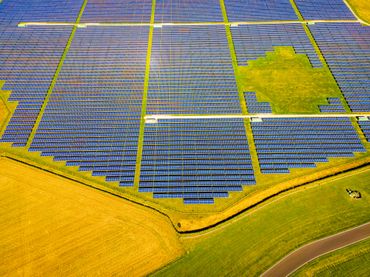
There is no shortage of debt or indeed enthusiasm for debt. According to LSEG data, project finance debt for the sector reached US$200bn in 2025. In the Americas, renewables deals accounted for US$107.9bn. Solar was US$76.3bn, battery storage US$16.3bn and wind US$12.5bn. In the EMEA region offshore wind helped the wind sector reach US$45.3bn whereas solar was US$27.9bn, while in Asia Pacific solar was US$10.2bn and wind, US$9.7bn. Standalone battery storage was US$4.8bn in EMEA and US$2.6bn in Asia Pacific.
Platform or common terms arrangements have become all the rage as developers scale up. Aside from the trophy mega deals such as offshore wind, many renewable projects are small to medium scale. Therefore, putting the projects into bigger platforms make sense in terms of economies of scale. Construction debt can be put in place and taken out later. As a result, project finance structures are looser, with one banker suggesting loan life cover ratios are becoming a historic relic but others on the arranging side are saying: "They are still banking the deals."
And there is no shortage of platform deals in the market right now. Low Carbon has just completed a £500m credit package split between holdco and construction/operational platform financing following the CVC DIF takeover. Interestingly the platform deal saw extra banks added – Societe Generale, HSBC, DNB, CIBC, Santander and SMBC – to the original Lloyds, NatWest, Intesa Sanpaolo and AIB Group.
In the works is KKR-backed Encavis finalising a €1.7bn financing that will include a US private placement financing to take out the interim acquisition debt when KKR bought the Hamburg-based renewables developer last year for €2.8bn. The KKR bid was backed with a €1.61bn interim financing from BNP Paribas, Credit Agricole, MUFG, NatWest, SMBC, UniCredit and Wilmington Trust as interim facility and security agent.
Canadian renewables developer Boralex is refinancing the debt on its 1.343GW French portfolio in a €1.5bn long-term platform financing via Rothschild. Energy Infrastructure Partners bought a 30% stake in the portfolio in 2022 at a €1.7bn equity valuation.
Reden Solar is refinancing the debt on its European assets into one platform under a common terms agreement. The €1.6bn refinancing will take all the project debt on the portfolio with €800m raised on a project finance basis and the rest as corporate debt. Macquarie Asset Management, British Columbia Investment Management and MEAG bought Toulouse-headquartered Reden Solar in 2022 at an enterprise value of €2.5bn from InfraVia Capital Partners and Eurazeo. The company has a 1GW-plus portfolio in Europe and Latin America.
Copenhagen Infrastructure Partners is putting in place a more traditional €1.6bn short-term M&A financing to back its €1.45bn purchase of Orsted's onshore wind portfolio – a decent valuation result although Orsted was originally seeking €1.5bn–€2bn.
In contrast some developers, particularly those who have to report in public, paint a very different picture.
Wiesbaden-based ABO Energy issued a sensible if gloomy statement in November explaining a downturn in 2025 fortunes – to the tune of moving a surplus of €29m–€39m to a net loss of €95m. Wind projects in Germany were hit by tougher tender competition. Negative impacts outside Germany included an oversupply of solar in Spain, an oversupply of wind in Finland, changes to grid access regulations in Greece and legislative changes affecting infrastructure sales in Hungary. "Market developments have progressed faster than anticipated," the company said.
Indeed. In late January that forecast was revised to a loss of €170m "primarily driven by drastically altered market conditions, which have resulted in special writedowns, revenue shifts and lower developer margins for renewable energy projects". Quite a shift in two months. ABO Energy had put in place a €240m three-year loan refinancing in August to add its €80m bond. A standstill agreement with its creditors has now been put in to enable a full restructuring plan. “This waiver is necessary in order to provide collateral for (interim) financing of ongoing projects and to maintain operational business,” the company said.
This month Baywa said there will be "significant deviations" in the business planning of its renewables subsidiary BayWa re due to "noticeable market developments" in the renewable energy sector in the US and Europe. The German company said no concrete figures are available but there will be an "impact on the total proceeds planned in BayWa restructuring concept from the sale of its stake in BayWa re, which is envisaged to take place by the end of 2028". BayWa was due to sell its majority stake in BayWa re to fellow shareholder EIP in early 2025 but the deal fell through and instead it put in place debt restructuring.
Developers are rushing to become IPPs with battery storage being quickly bolted onto their projects. The generation game has become very challenging even with platform shoes.
