


Dulles Airport P3 attracts interest
The US Department of Transportation has received a robust response to its request for information on a potential public-private partnership to build new terminals at Washington Dulles International Airport.
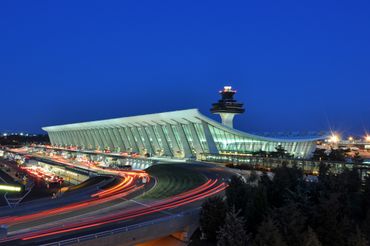
Respondents include Ferrovial; Macquarie Asset Management; BlackRock-backed Global Infrastructure Partners, in partnership with Bechtel; a joint venture of Fengate Capital Management and AltitudeX Aviation Group; Tikehau Star Infra; Glydways; AECOM; Alvarez & Marsal; a consortium of Washington-based advisory firms Phoenix Infrastructure Group and Ironbridge P3 Infrastructure; and Bermello Ajamil & Partners in partnership with Zaha Hadid Architects, among others.
The submissions contain vastly different levels of detail and most decline to put cost estimates on the project. Ferrovial's proposal did include a cost estimate at US$14.4bn. It proposes a new terminal building for US$3.9bn, renovation of satellite buildings for US$3.8bn, demolition of terminals C and D for US$3bn, and a US$1bn people mover. The project would not rely on federal funds or subsidies but does include funding from the Dulles toll road, which is operated by the Metropolitan Washington Airports Authority. Ferrovial is proposing to restructure the toll road to include dynamic pricing.
The proposal states that the DTR's toll rates are not as "optimised" as other regional toll facilities. "It is possible to generate additional value through dynamic pricing strategy adjusted on congestion levels – allowing for lower pricing during of-peak times and thereby increasing the use of the toll road by more cost-sensitive drivers", Ferrovial maintains. "MWAA can then use the generated value for re-leveraging the asset or market this value lever to increase the proceeds in case of monetisation".
Ferrovial maintains that an airport investment partnership programme with a long-term concession/lease is the "best-fit structure" for the Dulles airport modernidsation.
"This structure offers the highest potential to accelerate and derisk a transformational program because it combines upfront committed capital with a single point of accountability for delivery, operations, and lifecycle outcomes," the proposal states. Alternatively, Ferrovial floats the possibility of a design-build-finance-operate-maintain concession.
GIP's proposal offers two delivery models to finance construction: a terminal‑only design‑build‑finance‑operate-maintain structure, and a whole‑airport concession. GIP said its "strong recommendation" is a whole-airport concession as it provides "a holistic solution with a single point of accountability", the proposal states. GIP suggests a 75-year concession and says it would finance an upfront concession payment and the capital programme for the new terminals with debt and equity, and no need for government funding.
Fengate and AltitudeX Aviation submitted their proposal as a joint venture known as TRUMP Airports, with TRUMP as an acronym for Terminal Redevelopment & Upgrade Management Platform. It highlights the possibilities of a P3 model that could be demand-risk driven or availability-payment based. It also looks at a potential P3 structure using a long-term lease in which TRUMP Airports would be the lessee and the Metropolitan Washington Airports Authority would be the lessor. The lessee would design, build, finance, and operate a new terminal in exchange for compensation from airline revenue, terminal concession and advertising revenue, and certain pass-through expenses.
The team proposes a funding model that will include sponsor equity, short-term and long-term loans or bonds, and federal financing that could include a Transportation Infrastructure Finance and Innovation Act loan.
"TRUMP Airports will provide their equity contributions to the project to ensure adequate skin in the game from the developer whilst ensuring a cost-efficient leverage ratio", the proposal states. "A strategy to ensure that the team minimises the project’s cost of capital will be to 'back-end' any equity contribution. On each project, TRUMP Airports has negotiated with lenders and underwriters to allow equity proceeds that will eventually fund project costs to be secured by letters of credit. As the cost of a letter of credit is significantly lower than typically charged as an equity IRR, this results in lower financing costs."
On the prospect of a TIFIA loan, the proposal highlights Fengate's chairman of the board Martin Klepper, the former executive director of USDOT's Build America Bureau, which oversees the loans.
Multiple proposals used the P3 for JFK International Airport's New Terminal One in New York as a potential template for a project agreement and financing. The private partner on NTO is a consortium comprising Ferrovial Airports, JLC Infrastructure, Ullico Infrastructure Fund and The Carlyle Group.
The team is under contract to develop, design, construct, finance, operate and maintain the international passenger terminal that replaces the existing terminal. The project was initially funded with a five-year term loan, with two tranches totalling US$6.3bn, along with a US$200m liquidity facility, a US$50m working capital facility and a US$50m security deposit. A total of US$2.3bn of sponsor equity was backed by letters of credit. Multiple bond transactions have repaid a portion of the debt since financial close.
