


Political soccer
It is difficult to know what to make of the latest stop orders on the five US offshore wind farm projects in construction. For a start, the Department of the Interior is not sharing classified information for national security reasons. But whatever the ins and outs, US$12.1bn of project finance is on the line.
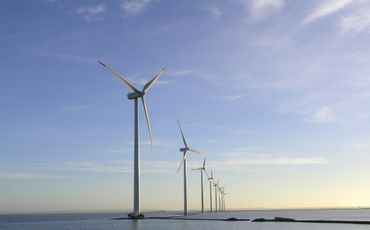
There are a range of theories as to why the stop orders were issued, three days before Christmas. Rhode Island Democrat senator Sheldon Whitehouse said it is due to a war between the dying fossil fuel industry and the clean energy industry. Probably not, the fossil fuel industry is quite busy right now.
Others have suggested a link between president Donald Trump's renewed interest in taking over Greenland from Denmark, given three of the projects are directly linked to Danish ownership via Orsted and CIP and Equinor, a Viking neighbour, has a stake in Orsted. That, however, leaves the Dominion/Stonepeak owners on CVOW, the largest scheme of the lot and not a Dane in sight.
There is a theory that there may actually be a national security issue with the offshore turbines impacting radar and so on. Perhaps but these projects have been around a long time and have been examined for a long time. Indeed, one project, CVOW, is due to supply power to the Pentagon and the CIA.
So it is difficult to assess what is going on. Last year two of the five schemes were hit by stop orders – Equinor's Empire Wind and Orsted's Revolution. One order, on Empire, was resolved at a political level and the other was resolved in the courts. Most people assumed that would be it. The message from the Federal Government was clear – no more offshore wind but there was little to be done about projects under construction. So December 22, stop order day, was a shock.
Given the projects have been through the hoops many times, the legal case for resuming construction must be strong. But presumably sponsors and lenders were still chewing their turkey a little harder this holiday season. The first time around Equinor told its lenders it would repay the debt on the project if the scheme was cancelled. So presumably that would still be the case although it was not publicly stated.
The Equinor debt is at the opco level, making a full repayment easier albeit painful. The other projects have debt backing the involvement of the financial sponsors, a little more complex, apart from Orsted's Sunrise, which was partly funded via a rights issue.
Orsted has won a judicial order unwinding its stop order on Revolution and Equinor and Dominion/Stonepeak have their day in court this week too. The outcome of Dominion/Stonepeak is unknown as PFI goes to press. The offshore wind industry assumes, hopes, the Revolution ruling will be a major precedent. However, District of Columbia senior judge Judge Royce Lamberth was the one who revoked the first Orsted stop order so his decision a second time around was not a surprise.
There is an added political dimension to the issue. The states that signed the key agreements on the project, aside from the Federal Bureau of Ocean Energy Management, are all big Democrat states – Rhode Island, Connecticut, Massachusetts and New York. If the projects were within the states they presumably could not be challenged. This risk to the project companies was well known but had to be taken for the projects to go ahead.
It is difficult to know where all this is going. If projects start to become a football between parties, where will it stop? We have already seen the phenomenon during the previous administration. Trump approved the Keystone XL pipeline in 2017 and Biden cancelled it in 2021 leading to sponsor TC Energy taking a US$1.8bn impairment charge.
Biden, like Trump on offshore wind, campaigned against Keystone XL so in both cases, you could say the decisions in office were not a surprise. But that presumably gives little comfort to those who have signed project agreements in good faith. Voters have a right to choose but sponsors have a right to certainty if they follow the rules.
The issue is coming up in another important renewables market – the UK. Last summer Reform UK deputy leader Richard Tice wrote to the bosses of major renewable energy companies warning them of the political risks of bidding in the contracts for difference allocation round seven, AR7, tender. Results on the first part of the tender, YEP offshore wind, are due out this week. At least 5GW–6GW is at stake, perhaps more if the bids are low.
Will developers need to put in as they move to financial close later in this decade as a general election looms? When the first carbon capture scheme was financed in the UK, lenders insisted on a judicial review clause to protect the debt in the event of trouble.
